


Sleep Sanctuary · Vol. 01 · Silk Education
Is a Silk Pillowcase Actually Worth It?
The overnight skincare upgrade no one talks about
- Cotton absorbs up to 30% of your night serum — silk doesn’t. Your skincare finally works overnight.
- Nightly fabric friction builds permanent sleep lines and causes hair breakage. Silk eliminates both.
- Real silk needs three specs: 100% mulberry · 22 momme · Grade 6A. Anything less is a compromise.
You have an $80 vitamin C serum sitting on your nightstand. You cleanse, you tone, you layer it carefully onto clean skin — the whole ritual. Then you press your face against a cotton pillowcase for eight hours and wonder why your skin still looks tired in the morning.
Here is what no one tells you: cotton is extraordinarily absorbent. It was designed to be. That same quality that makes a bath towel feel luxurious is quietly working against you every single night — pulling moisture, skincare product, and natural oils away from your face and hair while you sleep.
So before you add another serum to your routine, consider upgrading what you rest against for a third of your life.
“We spend roughly 2,900 hours a year with our face against a pillowcase. The material matters more than most people realize.”
Is a Silk Pillowcase Worth It? The Short Answer
Yes — but only if you choose the right one.
Not all silk is created equal. The market is full of products labeled “silk” that are actually polyester satin — a synthetic fabric that mimics the look of silk but offers none of the biological benefits. And even among genuine silk pillowcases, quality varies dramatically based on two numbers most brands hope you never ask about: momme weight and grade classification.
A genuinely effective silk pillowcase is made from 100% mulberry silk at 22 momme, Grade 6A. These are not marketing terms. They are precise material specifications that determine how the fabric performs against your skin, night after night.
Reason 1 — Your Skincare Stays On Your Skin
Cotton is hydrophilic — it bonds readily with water molecules. A standard cotton pillowcase can absorb a meaningful portion of whatever you apply to your face before bed, including the retinol, peptide serum, or hyaluronic acid you just spent $60 on.
Mulberry silk, by contrast, has a naturally low absorption rate. Its tightly packed protein fibers — primarily fibroin — create a surface that doesn’t readily bond with the water-soluble compounds in most skincare formulas. The product stays on your face, where it belongs.
Cotton is a sponge. Silk is glass. Your serum spreads across glass — it disappears into a sponge. Same product, very different result depending on what you sleep on.
The practical result: the same moisturiser you’ve been using for months may begin to perform noticeably better once you remove the nightly competition from your pillowcase. No new product required.
Additionally, silk’s natural protein structure — similar to that of human skin and hair — means it’s intrinsically less likely to trigger the kind of surface irritation that rough fibers can cause for people with acne-prone or sensitive skin.
Reason 2 — Less Friction Tonight, Fewer Lines Tomorrow
Every time you shift position during sleep, your skin moves against your pillowcase. On cotton, that movement creates mechanical friction — a subtle but cumulative pulling force that, over months and years, contributes to the formation of sleep lines that gradually deepen into permanent creases.
Plastic surgeons have noted for decades that they can often identify which side a patient typically sleeps on simply by observing asymmetric facial lines. This is not a skincare myth — it is basic physics applied to biology.
“Mulberry silk dramatically reduces this friction. At 22 momme, the fabric maintains its structure without bunching, while Grade 6A fiber quality ensures the surface stays smooth wash after wash.”
What this means for your hair
The same principle applies from the neck up. Cotton creates friction against individual hair strands, causing them to snag, tangle, and — over time — break. This is particularly relevant for color-treated hair, fine hair, or any textured curl pattern already more susceptible to mechanical damage.
Silk allows hair to move freely rather than resist. Curls maintain their definition. Blowouts last longer. The morning frizz you assumed was inevitable turns out to be, at least in part, a fabric problem.
Reason 3 — Better Sleep Is Better Skincare
This one is less obvious, but arguably the most important.
Silk is a natural temperature regulator. Its fiber structure allows air to circulate while retaining just enough warmth in cooler conditions — meaning it adapts to your body rather than fighting it. Unlike synthetic fabrics that trap heat and moisture, silk creates a microclimate around your face that stays comfortable through the night.
- Deep sleep = peak skin repair. Your body produces the most collagen and growth hormone during slow-wave sleep.
- Overheating disrupts sleep cycles. A temperature-regulating fabric helps you stay in deep sleep longer.
- Your skincare works harder overnight. Retinol, peptides, and ceramides are all most active during sleep — make sure they’re actually on your skin.
A pillowcase that helps rather than hinders this process is not a luxury. It is the foundation of what we call the Sleep Sanctuary — the idea that your bedroom environment deserves the same intentionality you bring to every other part of your self-care routine.
Cotton vs. 22-Momme Mulberry Silk
One table. Everything you need to see.
| Cotton Pillowcase | 22-Momme Silk Pillowcase |
|---|---|
| Absorbs 20–30% of your night serum | Barely absorbs — product stays on skin |
| Creates friction → sleep creases over time | Smooth surface → zero mechanical stress |
| Traps heat and moisture | Naturally regulates temperature |
| Pulls hair → breakage and frizz | Hair glides freely → less breakage overnight |
| Can harbour bacteria and allergens | Naturally hypoallergenic + antimicrobial |
| Replace every 1–2 years | Lasts 5–10 years with proper care |
How to Choose: A Buyer’s Guide to Real Silk
“Silk” on a label means almost nothing without supporting specifications. Here is exactly what to look for:
1 · Material: 100% Mulberry Silk
Mulberry silk is produced by silkworms fed exclusively on mulberry leaves, resulting in longer, more uniform fibers. If a product doesn’t specify “mulberry”, treat it with skepticism. Satin is not silk — satin describes a weave pattern, not a fiber. Polyester satin may feel smooth but offers none of silk’s biological benefits.
2 · Weight: 22 Momme Minimum
Momme (mm) measures silk fabric weight — analogous to thread count in cotton, but more meaningful. Here is how the scale breaks down:
3 · Grade: 6A
Silk is graded from A (lowest) to 6A (highest). Grade 6A means the longest, most uniform fibers with the finest sheen. Lower-grade silk degrades rapidly with washing. Grade 6A maintains consistent performance over years of use.
4 · Certifications to look for
A genuine 22-momme, Grade 6A mulberry silk pillowcase retails between $60 and $120. If you’re looking at something under $25 that claims to be real silk — it is not. The raw material cost alone makes it impossible.
Home Nest Art was founded on a simple conviction: the women who give the most — to their careers, their families, their communities — are often the last to give anything to themselves. Not because they don’t deserve it, but because the culture rarely reminds them that they do.
We built our Sleep Sanctuary collection — beginning with the Luminous™ Silk Pillowcase — because sleep is where every restoration begins. It is the foundation beneath every other wellness practice. And the objects you rest against at your most unguarded should be worthy of that trust.
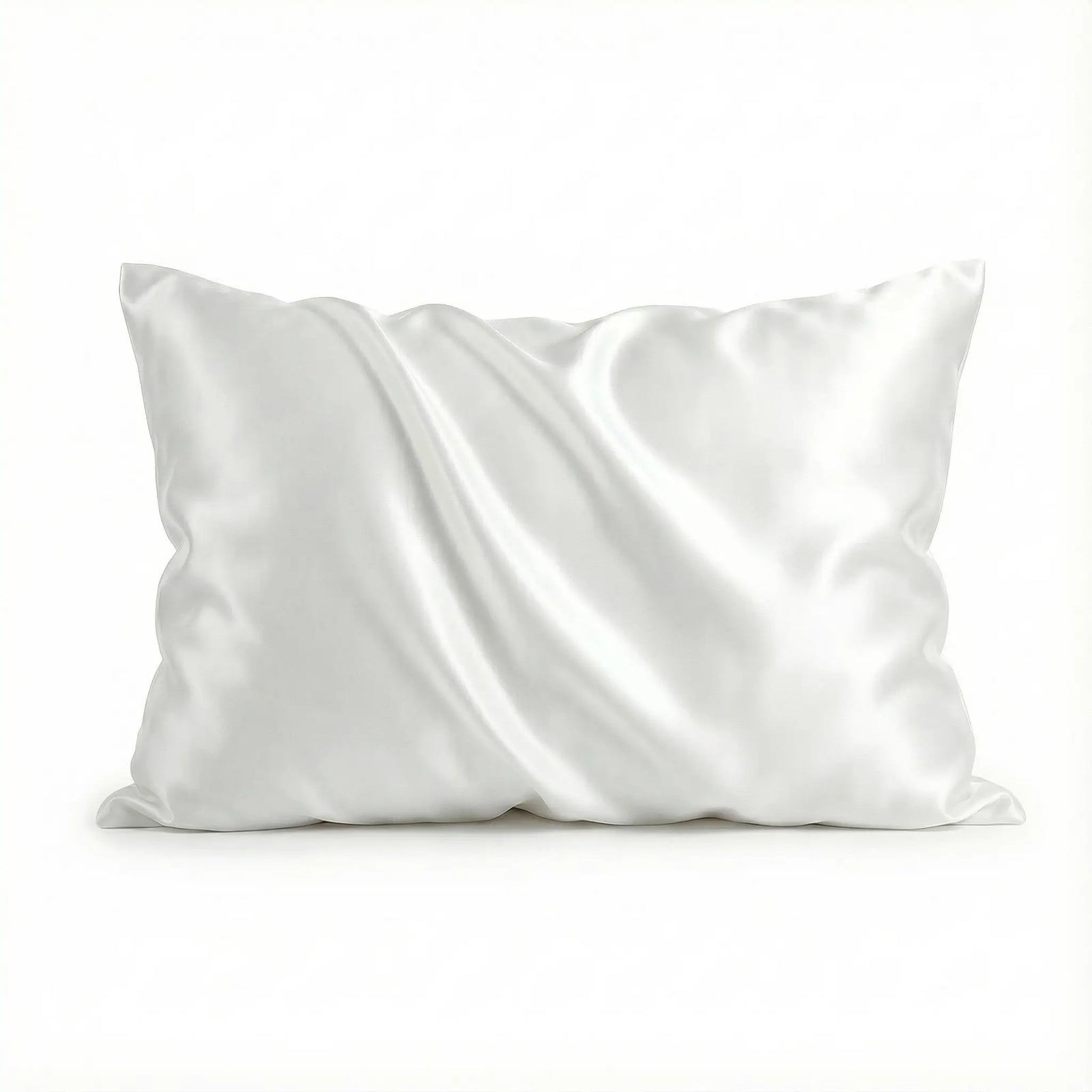
The Luminous™ is made from 100% Grade 6A mulberry silk at 22 momme, OEKO-TEX certified, available in four considered colors. It was not designed to be the cheapest silk pillowcase on the market. It was designed to be the last one you ever need to buy.
- Your skincare stays on your skin, not your pillowcase — so your nightly routine delivers on its actual promise.
- It eliminates the friction that contributes to sleep lines and hair breakage over months and years.
- It supports deeper sleep through natural temperature regulation — which is when your skin does its most essential repair work.
You have already invested in your skincare.
You have already committed to the routine. Let it work — starting tonight.
