

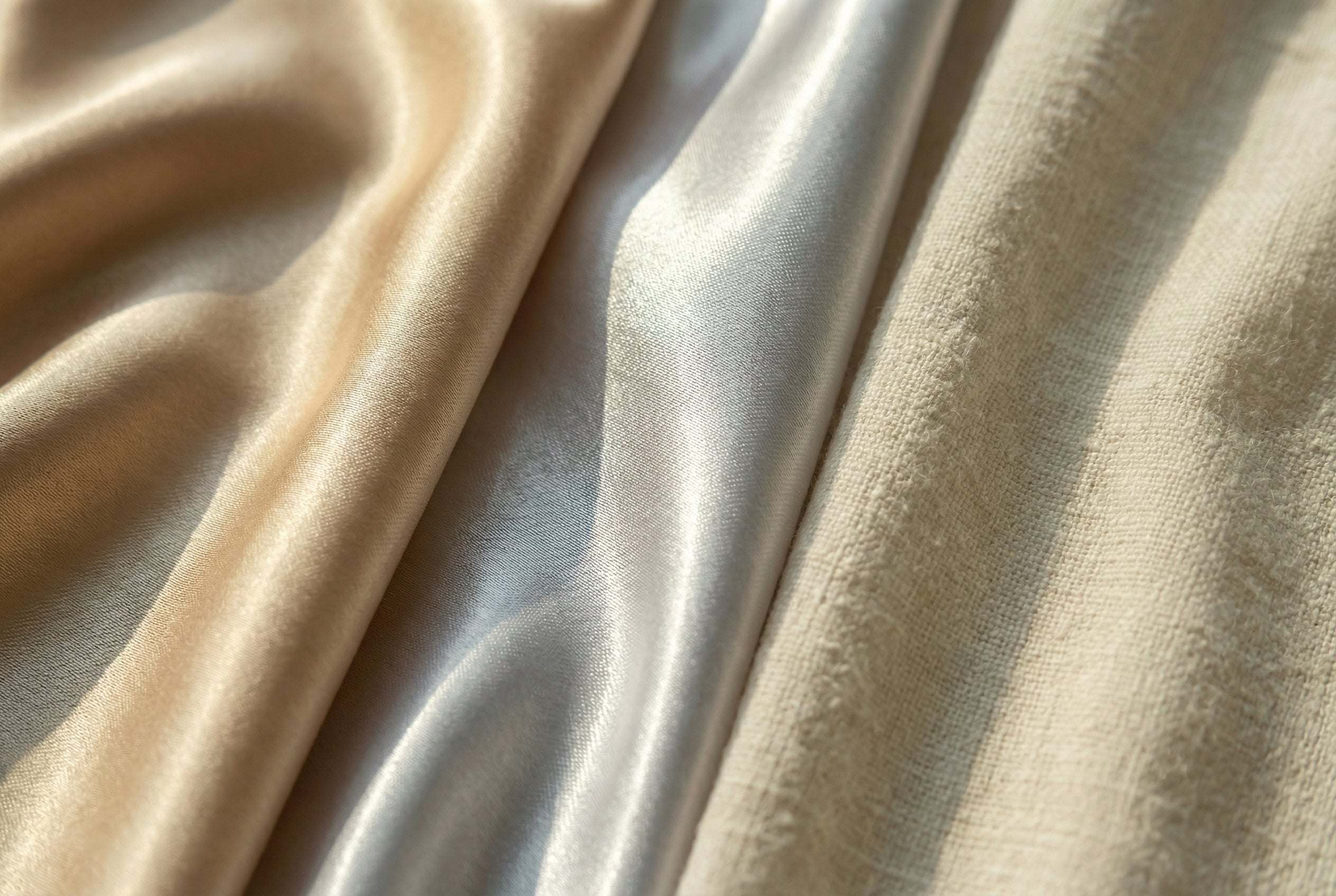
Silk vs. Satin vs. Cotton:
The Complete Fabric Comparison
Before you spend another night on the wrong pillowcase, let's clear up the confusion the bedding industry quietly profits from.

Key Takeaways
- Satin is a weave pattern , not a fiber — most satin pillowcase are polyester.
- True mulberry silk is a natural protein fiber with benefits synthetics cannot replicate.
- Cotton is breathable, but its texture creates friction — the main cause of sleep creases and hair breakage.
- When buying silk: look for 22+ momme, Grade 6A, and OEKO-TEX certification.
- The right pillowcase doesn't upgrade your skincare. It stops undoing it.
Why This Question Is So Confusing
If you've spent any time searching "silk vs. satin pillowcase," you already know how quickly things get murky. One brand calls its product "silky satin." Another lists "satin silk" in the product title. A third uses the word "silk" in the description and then buries "100% polyester" in the fine print.
This isn't accidental. The bedding industry has spent years blurring the line between silk and satin because satin is dramatically cheaper to produce — and "satin" sounds almost as luxurious. For consumers trying to make a smart purchase, the result is a fog of marketing language that makes it nearly impossible to know what you're actually buying.
This article is your way through that fog. We'll break down each fabric honestly — what it actually is, what it does for your skin and hair, and where it falls short — so you can make a decision based on facts, not packaging.
The Most Important Thing: Satin Is Not Silk
Let's start here, because everything else builds on this. Silk is a natural fiber — produced by silkworms, prized for thousands of years for its protein structure, temperature-regulating properties, and exceptional smoothness. Satin is a weave — a specific way of interlocking threads that creates a smooth, glossy surface on one side. Satin can be woven from silk, but also from polyester, nylon, or rayon.
"Calling a polyester pillowcase 'satin' is like calling a plastic chair 'a modern design.' Technically accurate. Functionally misleading."
Home Nest Art · Silk EducationWhen most satin pillowcases appear in online stores, they are polyester satin — not silk. The smooth surface mimics the look at a fraction of the cost, but the underlying material is entirely different. Understanding this distinction is the single most important thing you can take away from this article.
Cotton: The Comfortable Default
Cotton is the fabric most of us grew up sleeping on, and for good reason. It's durable, easy to wash, widely available, and genuinely comfortable. A high-quality Egyptian cotton pillowcase can feel wonderfully soft.
But here's what cotton doesn't do well: it creates friction. Even the softest cotton grips your skin and hair as you move through the night. That grip is what causes sleep lines (the creases that take longer and longer to fade as we get older) and is a major contributor to frizz, tangles, and hair breakage over time.
Cotton is also highly absorbent — which sounds like a feature. But when it comes to skincare, it works against you. Your pillowcase is quietly wicking away the moisturizers, serums, and natural oils your skin needs to repair itself overnight.
A note on thread count
Higher thread count does not equal less friction. Thread count measures how many threads are woven per square inch — it tells you about density, not smoothness. A 1,000-thread-count cotton pillowcase still has more surface friction than a quality silk pillowcase at any thread count.
Satin: The Silk Impersonator
Polyester satin pillowcases have exploded in popularity because they offer something real: less friction than cotton, at a price point that feels like a low-risk experiment. The smooth weave does reduce the kind of surface drag that leads to hair tangling and some sleep creases.
But the benefits largely stop there. Polyester is a synthetic, plastic-based material that traps heat rather than regulating it. That smooth surface can quickly become warm and slightly sweaty — not ideal for restorative sleep. And because polyester doesn't have silk's protein structure, it can't interact with your skin and hair at the same level.
Polyester also sheds microplastics with every wash, contributing to a growing environmental problem. Polyester satin isn't a villain — for someone new to the fabric category, it's a useful starting point. But it isn't silk, and the benefits don't compare.

Silk: What the Science Actually Says
Real mulberry silk — from silkworms fed exclusively on mulberry leaves — is composed primarily of two proteins: fibroin and sericin. These proteins give silk its smoothness, but they also do something no synthetic fabric can: they interact with your skin's own biology.
For your skin
Mulberry silk is smooth at a molecular level, creating almost zero friction as you move through the night. This means fewer sleep lines and less mechanical stress on skin that's already working hard to regenerate. Because silk absorbs far less moisture than cotton, your skincare stays where you put it — on your face, not the pillowcase.
For your hair
Friction lifts the hair's cuticle layer as you toss and turn, leading to frizz, breakage, and split ends over time. Silk's smooth surface lets hair glide, preserving the cuticle and keeping natural oils distributed evenly along the hair shaft. This matters most for curly, coily, color-treated, or fine hair — the types most vulnerable to friction damage.
For your sleep temperature
Silk is a natural temperature regulator. Breathable and moisture-wicking, it stays cool in warm months and doesn't chill in cooler ones. This thermal neutrality contributes meaningfully to sleep quality itself — not just the cosmetic outcomes of it.
"The right pillowcase doesn't do your skincare for you. It stops undoing it."
Side-by-Side Comparison
Here's where all three fabrics land when measured against what actually matters for sleep, skin, and hair.
| Cotton | Polyester Satin | Mulberry Silk ✦ | |
|---|---|---|---|
| Friction Level | High | Low–Medium | Very Low |
| Moisture Absorption | High (pulls away skincare) | Low | Low (preserves skincare) |
| Temperature Regulation | Good | Poor — traps heat | Excellent |
| Skin Benefit | Minimal | Mild | Significant |
| Hair Benefit | Minimal | Moderate | Significant |
| Natural Fiber | Yes | No — synthetic plastic | Yes |
| Hypoallergenic | Generally yes | Varies | Yes — naturally |
| Environmental Impact | Moderate | High — microplastics | Low — biodegradable |
| Durability | Excellent | Good | Good with care |
| Price Range | $10–$60 | $10–$40 | $45–$120+ |
How to Spot Real Silk (And Avoid Getting Burned)
The silk market is full of ambiguous language. Here are the three numbers that actually matter — and what to look for on every label.
Momme weight (mm)
Momme is to silk what thread count is to cotton — it measures density and quality. Below 19 momme: lightweight, prone to wear. 22 momme is the sweet spot for a pillowcase — substantial, smooth, and durable without feeling stiff. Anything labeled simply as "silk" without a momme count is a red flag.
Grade 6A
Mulberry silk is graded by the length and consistency of its threads. Grade 6A is the highest — long, uniform fibers that produce the smoothest, most consistent weave. Lower grades feel rougher and degrade faster. Look for it called out explicitly in the product details.
OEKO-TEX certification
OEKO-TEX Standard 100 means the fabric has been tested for harmful substances at every stage of production. It's one of the most trusted textile certifications globally — and for something you press your face into for eight hours a night, it matters.
Quick label checklist
- ✓100% mulberry silk — not "satin," not "silk-like"
- ✓22 momme or higher
- ✓Grade 6A stated explicitly
- ✓OEKO-TEX Standard 100 certified
- ✓Silk on both sides — not just the top
- ✗Avoid: "silk satin," "silky polyester," vague "silk blend"

When we designed The Luminous™ Silk Pillowcase at Home Nest Art, these weren't checkboxes — they were the starting point. Every detail, from the 22-momme Grade 6A mulberry silk to the OEKO-TEX certification, exists because we believed the women sleeping on it deserved something genuinely good for them. Not silk-inspired. Not silky smooth. Silk.
The Verdict
If you want a reliable, affordable pillowcase and your skin and hair aren't a priority, cotton is a perfectly reasonable choice — it's stood the test of time for a reason.
If you're curious about a smoother surface but aren't ready to commit, polyester satin is a low-cost way to test the concept. Just go in knowing what you're actually buying.
But if you've spent any real money on skincare. If you take your hair health seriously. If you've noticed that your sleep quality — and how you feel when you wake up — actually affects the rest of your day. Then real mulberry silk isn't an indulgence. It's one of the most sensible investments you can make for the eight hours a night when your body is doing its most important work.
In summary
- Satin is a weave — not a fiber. Most satin pillowcases are polyester.
- Cotton creates friction that works against skin and hair overnight.
- Mulberry silk reduces friction, preserves skincare, and regulates temperature.
- Verify before buying: 22mm+ momme, Grade 6A, OEKO-TEX, 100% mulberry silk on both sides.
- The best pillowcase is the one that stops working against you while you sleep.
Your skin is repairing itself tonight.
Your pillowcase should let it.
Eight hours. The one investment that works while you sleep.
Explore The Luminous™ Pillowcase